Author: admin

  • The Generative AI Revolution of 2026: From Hype to Ubiquity

    In the early 2020s, generative artificial intelligence was often characterized as a digital novelty—a sophisticated parlor trick capable of drafting emails or generating surrealist imagery. However, as we navigate the landscape of 2026, that narrative has fundamentally shifted. We are no longer discussing the “potential” of AI; we are living in its era of ubiquity. The transition from experimental hype to foundational infrastructure is complete, marking 2026 as the year generative AI became as essential to global commerce and daily life as the internet itself.

    The Exponential Surge: 837 Million and Counting

    The most visible metric of this revolution is the sheer scale of user adoption. In the first quarter of 2026, ChatGPT reached a historic milestone, recording 837 million monthly active users (MAUs) in April. This represents a staggering trajectory from its initial breakout in late 2022.

    [ai_chart type=”chatgpt” /]

    A Market Defined by Value, Not Speculation

    The financial landscape of 2026 reflects a market that has matured. The global generative AI market value has surged to $83.3 billion this year. Unlike the speculative bubbles of previous tech cycles, this valuation is anchored in tangible ROI and enterprise spending.

    [ai_chart type=”market” /]

    Fortune 500: From Pilots to Core Operations

    In 2026, the “wait and see” approach has become a relic of the past. Business integration of generative AI has reached a saturation point among the Fortune 500. What began as small-scale pilot programs in 2023 has evolved into full-scale operational dependency.

    • Efficiency Gains (2023-2024): Using AI for coding assistance, content generation, and customer service chatbots.
    • Process Transformation (2025): Redesigning workflows around AI capabilities, leading to the “lean enterprise” model where output per employee increased by an average of 40%.
    • Strategic Autonomy (2026): Deploying AI agents that manage supply chains, optimize real-time pricing, and conduct R&D simulations with minimal human oversight.

    The competitive moat for modern corporations is no longer just data; it is the “inference capacity”—the ability to turn that data into actionable intelligence at scale. Companies that failed to integrate generative AI into their core stack by 2025 are now facing significant existential threats from AI-native startups that operate with a fraction of the traditional overhead.

    The Human-AI Synthesis

    Perhaps the most profound change in 2026 is the shift in the workforce. The fear of total displacement has been replaced by a focus on synthesis. The most successful professionals in 2026 are “AI Orchestrators”—individuals who can manage fleets of AI agents to achieve complex outcomes. Education systems have pivoted, prioritizing prompt engineering, algorithmic bias mitigation, and strategic thinking over rote technical skills.

    Furthermore, the democratization of creativity has reached its zenith. In 2026, a single individual can produce a high-fidelity feature film or a complex software suite using generative tools, effectively collapsing the barrier between ideation and execution.

    Looking Toward 2027: The Next Frontier

    As we look toward 2027, the focus is shifting from “generative” to “agentic” and “multimodal.” We are moving into an era where AI doesn’t just generate content but interacts with the physical world through advanced robotics and IoT integration. The conversation is also turning toward the “Energy Wall”—the massive power requirements of these models—and the urgent need for sustainable, localized AI compute.

    The revolution of 2026 has proven that generative AI was never a trend. It was a fundamental rewiring of the global economy. As the lines between human intent and machine execution continue to blur, the question for 2027 is no longer how we use AI, but how we will define human value in a world where intelligence is a utility.

  • The Hidden Edge: A Guide to Concealed Shinobi Blades for Modern Practitioners

    The Hidden Edge: A Guide to Concealed Shinobi Blades for Modern Practitioners

    The allure of the concealed Shinobi blade lies in its duality. It is a testament to both the lethality of the warrior and the cleverness of the inventor. These weapons remind us that power is not always found in the most overt display, but often in the quiet, the unseen, and the prepared. Whether viewed as historical artifacts of a bygone era of espionage or as masterpieces of modern smithing, the hidden edge remains a potent symbol of the Shinobi spirit.

    The Shikomizue: The Masterpiece of Deception

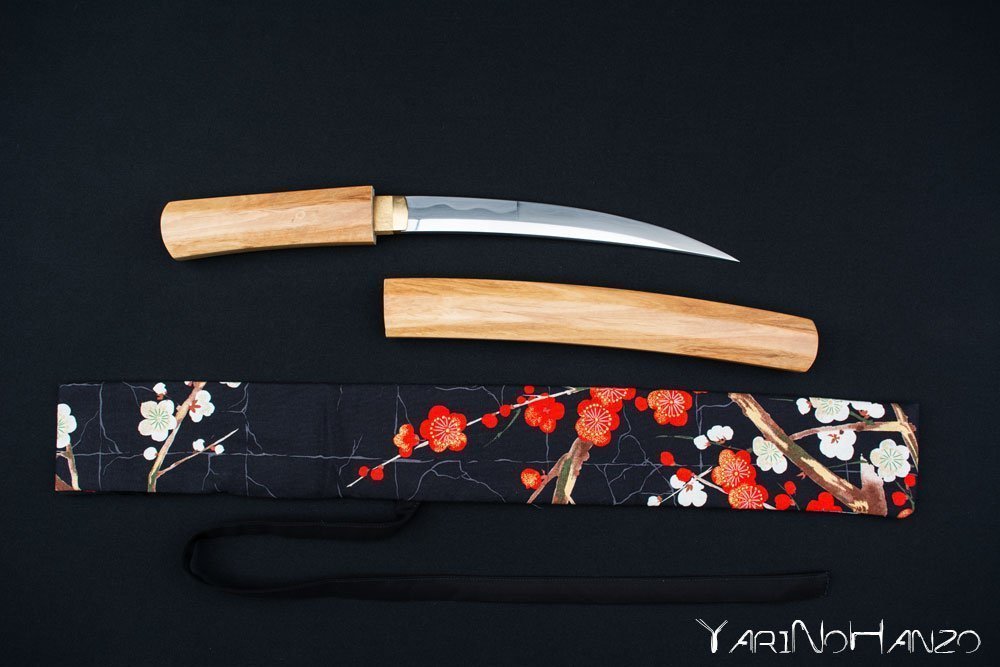
    Perhaps the most iconic of all concealed Shinobi weapons is the Shikomizue, or “prepared cane.” To the untrained eye, the Shikomizue appeared to be nothing more than a simple wooden walking stick or a monk’s staff. However, within its hollowed-out koshirae (mountings) lay a razor-sharp blade. Unlike the traditional Katana, the Shikomizue typically lacked a tsuba (handguard), as a guard would immediately betray the object’s true nature as a weapon.

    Conclusion: The Enduring Appeal of the Hidden Edge

    For the modern practitioner, studying these weapons offers more than just technical knowledge; it provides a window into a philosophy where adaptability is the greatest weapon of all. In a world that is increasingly loud and transparent, there is a profound, mysterious respect to be found in the blade that waits silently in the shadows, ready to emerge only when the moment is exactly right.

  • The Modern Shinobi: Fusing Ancient Discipline with Contemporary Craftsmanship

    The Modern Shinobi: Fusing Ancient Discipline with Contemporary Craftsmanship

    The Modern Shinobi: Fusing Ancient Discipline with Contemporary Craftsmanship

    The shadows of the Sengoku period have long since dissipated, but the spirit of the shinobi remains. Once the clandestine agents of feudal Japan, the ninja were defined not just by their ability to vanish into the night, but by a rigorous adherence to ninjutsu—the art of endurance, perseverance, and stealth. Today, the image of the shadow warrior has evolved. We no longer navigate the rafters of fortified castles, yet the demand for the shinobi’s mindset has never been greater. At Ninja Chronicles, we recognize that the modern shinobi is an enthusiast of both history and high-performance utility, often rooted in the ninja philosophy of discipline.

    The transition from historical mercenary to contemporary practitioner is a journey of refinement. It is a shift from survival in a warring state to the pursuit of mastery in a chaotic digital world. This evolution is anchored by a singular, unwavering constant: the tools we carry and the discipline we exert over them.

    A master sharpening a Damascus steel ninja blade

    The Art of the Blade: Engineering the Edge

    In the hands of a master, a knife is not merely a tool; it is a physical manifestation of intent. Historically, the shinobi relied on the shikoro-ken or the tantō, blades forged from tamahagane steel that required constant maintenance and ritualistic care. While we honor those traditions, the modern era has introduced metallurgy that the smiths of Iga and Koga could only dream of. Contemporary craftsmanship at Baskett Knives focuses on the marriage of ergonomics and high-carbon alloys like CPM-S35VN or D2 tool steel.

    The modern blade must be versatile. It requires a geometry that allows for surgical precision in utility tasks while maintaining the structural integrity needed for tactical applications. We look for a balance that feels like a natural extension of the arm. The “Art of the Blade” today is found in the heat treatment, the cryogenic tempering, and the hand-ground bevels that ensure a razor-sharp edge that lasts through the most demanding environments. When you hold a modern tactical knife, you are holding centuries of combat evolution refined by the cold, hard logic of modern physics.

    Technical Mastery in the Digital Age

    Discipline is the invisible armor of the shinobi. In the 16th century, this meant physical conditioning and the mastery of the “Six Essential Tools.” In the 21st century, technical mastery has moved into the mental and digital realms. The modern shinobi understands that true stealth is as much about information security and situational awareness as it is about footwork. However, the core of the discipline remains unchanged: the ability to focus amidst distraction.

    A ninja training in a modern dojo with neon skyline

    Training today involves a synthesis of traditional martial arts and modern tactical theory. It is the practice of Mushin—the mind without mind—applied to high-stress environments. Whether you are honing your skills in a dojo or practicing rapid-deployment drills with a folding knife, the goal is muscle memory so profound that thought becomes unnecessary. This discipline extends to how we maintain our gear. A modern shinobi does not wait for a blade to dull; they understand the meditative process of honing and stropping, ensuring their equipment is as ready as their mind.

    Tools of the Trade: From Kunai to Tactical Gear

    The arsenal of the shadow warrior has undergone a radical transformation. The iconic kunai, originally a masonry tool repurposed for defense, has found its successor in the precision-balanced throwing knives of today. Modern throwing knives are engineered with aerodynamic symmetry, often crafted from 420HC stainless steel to withstand the immense shock of repeated impacts. They are no longer crude iron spikes but calibrated instruments of kinetic energy.

    • Tactical Folders: The modern equivalent of the hidden blade, featuring ball-bearing pivots and frame locks for instantaneous deployment.
    • Throwing Stars (Shuriken): Now refined through CNC machining to ensure perfect weight distribution for consistent rotation.
    • EDC (Everyday Carry) Kits: A curated selection of multi-tools, tactical pens, and high-lumen flashlights that mirror the versatility of the historical shinobi’s utility belt.

    Beyond the steel, the modern shinobi utilizes advanced textiles and modular gear. Kydex sheaths have replaced leather and wood, offering superior retention and weather resistance. This is the “Contemporary Craftsmanship” that defines our era—gear that is lighter, stronger, and more concealable than anything that came before it.

    Collection of modern ninja throwing knives and shuriken

    Conclusion: Living the Way of the Shadow

    To be a modern shinobi is to walk a path of quiet excellence. It is not about the costume or the myth, but about the integration of ancient philosophy into a modern lifestyle. It is the respect for the blade, the dedication to the craft, and the unwavering discipline to stay prepared for whatever the shadows may hold. At Ninja Chronicles, we provide the steel and the stories, but the spirit is yours to forge. As you carry your blade and hone your skills, remember that you are part of a lineage that spans a millennium. The tools have changed, the world has moved on, but the way of the shadow remains eternal.

    “The blade is the soul, but the mind is the master. In the fusion of old and new, we find the perfect edge.”

    — The Ninja Chronicles Editorial Team
  • The Art of Ninja Knife Throwing: History, Technique & Mastery

    The Art of Ninja Knife Throwing: History, Technique & Mastery

    Few martial skills carry the mystique and lethal elegance of the ninja’s ability to throw a blade with pinpoint accuracy. Whether streaking through the shadows of feudal Japan or practiced by modern enthusiasts in dojos worldwide, knife throwing represents the perfect union of physics, discipline, and artistry. In this guide, we’ll explore the rich history behind this ancient skill, the weapons used, the techniques that define mastery, and how you can begin your own journey into this captivating discipline.

    A Weapon Born in the Shadows: The History of Ninja Knife Throwing

    The art of throwing edged weapons stretches back thousands of years, but it was the shinobi — the legendary spies and assassins of feudal Japan — who elevated it to an art form. Known as shurikenjutsu, the technique of throwing bladed instruments was a core component of ninjutsu, the secretive martial system of the ninja.

    Unlike the glamorized Hollywood version, ninja knife throwing was never intended as a killing blow. Instead, it served as a distraction — a way to create enough of a window to flee, to close distance, or to disarm an opponent. The psychological impact of a spinning blade appearing out of nowhere was often just as powerful as the physical threat it posed.

    A flat-lay arrangement of traditional Japanese ninja throwing weapons including shuriken and kunai
    Traditional ninja throwing weapons: shuriken, kunai, and bo-shuriken — each designed for a specific purpose and throwing style.

    Know Your Blades: Types of Throwing Knives and Ninja Weapons

    Not all throwing blades are created equal. The world of ninja throwing weapons is diverse, with each design optimized for different throwing styles, distances, and purposes. Here are the most iconic types:

    • Kunai: Perhaps the most iconic ninja tool, the kunai originated as a farming implement before being adopted as a multi-purpose weapon. Its leaf-shaped blade and ring pommel make it well-balanced for throwing and useful for climbing.
    • Shuriken (Hira-shuriken): The classic “throwing star,” available in multiple shapes — from four-pointed (ninja-to) to the more complex eight-pointed varieties. Designed to be thrown flat with a flick of the wrist.
    • Bo-shuriken: A spike or straight blade thrown end-over-end or in a straight trajectory. Requires significant technique but is devastatingly accurate in experienced hands.
    • Modern Sport Throwing Knives: Today’s practitioners often use purpose-built throwing knives — balanced, blunt-spined, and typically 12–16 inches in length — designed for sport and training safety.

    The Grip: Where Mastery Begins

    Every expert thrower will tell you the same thing: the grip is everything. It determines the rotation of the blade, the release point, and ultimately where the knife lands. There are two fundamental grip styles used in knife throwing:

    Close-up of skilled hands demonstrating the proper pinch grip for knife throwing
    The pinch grip — the foundation of accurate knife throwing. Notice how the thumb and forefinger secure the spine of the blade without gripping too tightly.

    The Blade Grip

    Hold the knife by the blade (spine, not the edge), with the tip pointing away from you. Your thumb rests flat along the flat of the blade and your fingers curl underneath. This grip is used when you want the handle to strike the target first after a single rotation. It’s typically used at shorter distances — around 10–12 feet.

    The Handle Grip

    Grip the handle firmly but not tightly — think of it like holding a bird: tight enough that it can’t escape, gentle enough that you don’t crush it. The handle grip allows the blade to rotate so the tip strikes the target first. It’s preferred at greater distances — typically 14–20 feet for a single rotation.

    The universal key with either grip is a clean, smooth release. The knife should leave your hand at the same point every single time. Inconsistency in release is the number-one cause of errant throws — not the rotation, not the distance, but the moment of letting go.

    Target Practice: Building Consistency Through Repetition

    No skill is built without dedicated, deliberate practice — and knife throwing is no exception. A proper target setup is essential both for safety and skill development.

    A traditional wooden target board with multiple throwing knives embedded from practice
    A well-worn target board tells the story of countless hours of practice. Notice the tight grouping — the hallmark of a skilled thrower building muscle memory.

    Choosing the Right Target

    The ideal target for knife throwing is a thick slab of end-grain wood, typically from soft to medium hardness trees like pine, basswood, or cottonwood. End-grain targets absorb impact evenly, grip the blade on entry, and last significantly longer than face-grain alternatives. Aim for a target at least 12 inches thick and 18–24 inches in diameter.

    Distance and Rotation

    Understanding throwing distance is critical. Each full rotation of the knife covers approximately 6–8 feet of distance, depending on the weight and length of the blade. New throwers should start at a half-rotation distance (around 6 feet) and work outward. Mark your distances clearly and only change them once you achieve consistent, clean sticks at your current distance.

    Safety First: The Ninja’s Code of Respect

    The ninja’s greatest weapon was never a blade — it was discipline. Before you throw a single knife, internalize these non-negotiable safety rules:

    • Establish a clear range: Ensure no one can walk into the throwing lane from any direction.
    • Never throw toward people or animals: This seems obvious, but adrenaline and confidence can cloud judgment.
    • Inspect your blades before every session: Check for cracks, loose handles, or damaged tips that could alter trajectory.
    • Use a proper backstop: A solid wooden backstop behind your target will catch any knives that pass through or bounce off.
    • Always approach the target from the side: Walk parallel to the target when retrieving knives — never directly toward it until you’re certain all throwing has stopped.

    The Path to Mastery: Train Like a Ninja

    True mastery of knife throwing — like any martial art — is not measured in tricks or distance records. It’s measured in consistency, control, and the quiet confidence of a practitioner who knows exactly what their body and blade will do before the throw is made.

    Start with a single knife. Throw it a thousand times at the same distance before moving further back. Focus obsessively on your release point, your stance, and your follow-through. Record yourself on video to spot inconsistencies invisible to the naked eye.

    Join a community — the knife throwing world is surprisingly welcoming, from local clubs to international organizations like the American Knife Throwers Alliance (AKTA) and the Knife Throwers Hall of Fame. Connect, compete, and learn from practitioners who’ve put in the hours you aspire to.

    The blade doesn’t lie. Every throw tells the truth about your technique. Embrace that honesty, learn from every miss, and let the pursuit of the perfect stick become your meditation. That’s not just knife throwing — that’s the way of the ninja.

  • The Art of Ninja Knife Throwing: History, Technique & Mastery

    The Art of Ninja Knife Throwing: History, Technique & Mastery

    Few martial skills carry the mystique and lethal elegance of the ninja’s ability to throw a blade with pinpoint accuracy. Whether streaking through the shadows of feudal Japan or practiced by modern enthusiasts in dojos worldwide, knife throwing represents the perfect union of physics, discipline, and artistry. In this guide, we’ll explore the rich history behind this ancient skill, the weapons used, the techniques that define mastery, and how you can begin your own journey into this captivating discipline.

    A Weapon Born in the Shadows: The History of Ninja Knife Throwing

    The art of throwing edged weapons stretches back thousands of years, but it was the shinobi — the legendary spies and assassins of feudal Japan — who elevated it to an art form. Known as shurikenjutsu, the technique of throwing bladed instruments was a core component of ninjutsu, the secretive martial system of the ninja.

    Unlike the glamorized Hollywood version, ninja knife throwing was never intended as a killing blow. Instead, it served as a distraction — a way to create enough of a window to flee, to close distance, or to disarm an opponent. The psychological impact of a spinning blade appearing out of nowhere was often just as powerful as the physical threat it posed.

    A flat-lay arrangement of traditional Japanese ninja throwing weapons including shuriken and kunai
    Traditional ninja throwing weapons: shuriken, kunai, and bo-shuriken — each designed for a specific purpose and throwing style.

    Know Your Blades: Types of Throwing Knives and Ninja Weapons

    Not all throwing blades are created equal. The world of ninja throwing weapons is diverse, with each design optimized for different throwing styles, distances, and purposes. Here are the most iconic types:

    • Kunai: Perhaps the most iconic ninja tool, the kunai originated as a farming implement before being adopted as a multi-purpose weapon. Its leaf-shaped blade and ring pommel make it well-balanced for throwing and useful for climbing.
    • Shuriken (Hira-shuriken): The classic “throwing star,” available in multiple shapes — from four-pointed (ninja-to) to the more complex eight-pointed varieties. Designed to be thrown flat with a flick of the wrist.
    • Bo-shuriken: A spike or straight blade thrown end-over-end or in a straight trajectory. Requires significant technique but is devastatingly accurate in experienced hands.
    • Modern Sport Throwing Knives: Today’s practitioners often use purpose-built throwing knives — balanced, blunt-spined, and typically 12–16 inches in length — designed for sport and training safety.

    The Grip: Where Mastery Begins

    Every expert thrower will tell you the same thing: the grip is everything. It determines the rotation of the blade, the release point, and ultimately where the knife lands. There are two fundamental grip styles used in knife throwing:

    Close-up of skilled hands demonstrating the proper pinch grip for knife throwing
    The pinch grip — the foundation of accurate knife throwing. Notice how the thumb and forefinger secure the spine of the blade without gripping too tightly.

    The Blade Grip

    Hold the knife by the blade (spine, not the edge), with the tip pointing away from you. Your thumb rests flat along the flat of the blade and your fingers curl underneath. This grip is used when you want the handle to strike the target first after a single rotation. It’s typically used at shorter distances — around 10–12 feet.

    The Handle Grip

    Grip the handle firmly but not tightly — think of it like holding a bird: tight enough that it can’t escape, gentle enough that you don’t crush it. The handle grip allows the blade to rotate so the tip strikes the target first. It’s preferred at greater distances — typically 14–20 feet for a single rotation.

    The universal key with either grip is a clean, smooth release. The knife should leave your hand at the same point every single time. Inconsistency in release is the number-one cause of errant throws — not the rotation, not the distance, but the moment of letting go.

    Target Practice: Building Consistency Through Repetition

    No skill is built without dedicated, deliberate practice — and knife throwing is no exception. A proper target setup is essential both for safety and skill development.

    A traditional wooden target board with multiple throwing knives embedded from practice
    A well-worn target board tells the story of countless hours of practice. Notice the tight grouping — the hallmark of a skilled thrower building muscle memory.

    Choosing the Right Target

    The ideal target for knife throwing is a thick slab of end-grain wood, typically from soft to medium hardness trees like pine, basswood, or cottonwood. End-grain targets absorb impact evenly, grip the blade on entry, and last significantly longer than face-grain alternatives. Aim for a target at least 12 inches thick and 18–24 inches in diameter.

    Distance and Rotation

    Understanding throwing distance is critical. Each full rotation of the knife covers approximately 6–8 feet of distance, depending on the weight and length of the blade. New throwers should start at a half-rotation distance (around 6 feet) and work outward. Mark your distances clearly and only change them once you achieve consistent, clean sticks at your current distance.

    Safety First: The Ninja’s Code of Respect

    The ninja’s greatest weapon was never a blade — it was discipline. Before you throw a single knife, internalize these non-negotiable safety rules:

    • Establish a clear range: Ensure no one can walk into the throwing lane from any direction.
    • Never throw toward people or animals: This seems obvious, but adrenaline and confidence can cloud judgment.
    • Inspect your blades before every session: Check for cracks, loose handles, or damaged tips that could alter trajectory.
    • Use a proper backstop: A solid wooden backstop behind your target will catch any knives that pass through or bounce off.
    • Always approach the target from the side: Walk parallel to the target when retrieving knives — never directly toward it until you’re certain all throwing has stopped.

    The Path to Mastery: Train Like a Ninja

    True mastery of knife throwing — like any martial art — is not measured in tricks or distance records. It’s measured in consistency, control, and the quiet confidence of a practitioner who knows exactly what their body and blade will do before the throw is made.

    Start with a single knife. Throw it a thousand times at the same distance before moving further back. Focus obsessively on your release point, your stance, and your follow-through. Record yourself on video to spot inconsistencies invisible to the naked eye.

    Join a community — the knife throwing world is surprisingly welcoming, from local clubs to international organizations like the American Knife Throwers Alliance (AKTA) and the Knife Throwers Hall of Fame. Connect, compete, and learn from practitioners who’ve put in the hours you aspire to.

    The blade doesn’t lie. Every throw tells the truth about your technique. Embrace that honesty, learn from every miss, and let the pursuit of the perfect stick become your meditation. That’s not just knife throwing — that’s the way of the ninja.

  • The Trade War at 145%: Inside the Most Aggressive US-China Tariff Escalation in History

    In what economists are calling the most dramatic trade escalation since the Smoot-Hawley Tariff Act of 1930, the United States has raised its total tariff rate on Chinese goods to a jaw-dropping 145 percent. China has hit back with 125 percent duties on American exports. The two largest economies in the world are locked in a full-scale trade war — and the ripple effects are being felt from factory floors in Guangdong to supermarket shelves in Ohio.

    How We Got Here: A Rapid Escalation

    It did not happen overnight. Since President Trump returned to office in January 2025, tariffs on Chinese goods have been ratcheted up in rapid succession. What began as a 10 percent “fentanyl tariff” in February 2025 ballooned — through a series of executive orders, retaliatory countermoves, and escalating ultimatums — into a combined rate of 145 percent by April 10, 2025.

    The key inflection point came on April 9, when Trump announced an immediate hike of the reciprocal tariff on China to 125 percent — on top of the existing 20 percent “fentanyl” duties — after Beijing refused to back down and raised its own tariffs on US goods to 84 percent. The White House framed the move as retaliation for China’s retaliation, a feedback loop that has left global markets deeply unsettled.

    US Tariff Rate on Chinese Imports: The Escalation Timeline

    Combined effective tariff rate applied to most Chinese goods entering the United States (2025)

    (function() {
    var ctx = document.getElementById(“tariffEscalationChart”).getContext(“2d”);
    new Chart(ctx, {
    type: “line”,
    data: {
    labels: [“Jan 20”, “Feb 4”, “Mar 4”, “Apr 2”, “Apr 5”, “Apr 9”, “Apr 10”],
    datasets: [{
    label: “US Tariff Rate on China (%)”,
    data: [0, 10, 20, 54, 54, 104, 145],
    borderColor: “#e63946”,
    backgroundColor: “rgba(230, 57, 70, 0.12)”,
    borderWidth: 3,
    pointBackgroundColor: “#e63946”,
    pointRadius: 6,
    pointHoverRadius: 9,
    fill: true,
    tension: 0.3
    }]
    },
    options: {
    responsive: true,
    plugins: {
    legend: { display: true, position: “top” },
    tooltip: { callbacks: { label: function(c) { return ” Tariff Rate: ” + c.parsed.y + “%”; } } }
    },
    scales: {
    y: { beginAtZero: true, max: 160, ticks: { callback: function(v) { return v + “%”; } }, title: { display: true, text: “Tariff Rate (%)” } },
    x: { title: { display: true, text: “Date (2025)” } }
    }
    }
    });
    })();

    The Economic Fallout: Numbers That Tell the Story

    The financial toll is already measurable. According to the Tax Foundation, the 2025 Trump tariffs amounted to an average tax increase of $1,000 per US household — a burden felt most acutely by lower- and middle-income families. Customs duties collected by the federal government skyrocketed from $79 billion in 2024 to a record $264 billion in 2025 — a more than 230 percent increase in a single year.

    The US average effective tariff rate climbed from just 2.4 percent in 2024 to 7.7 percent in 2025 — the highest level since 1947. Yet economists caution that this revenue windfall comes with a hidden price: higher prices at checkout, disrupted supply chains, and long-run GDP losses estimated at 0.2 percent from Section 232 tariffs alone. Meanwhile, the trade deficit — the very thing Trump’s tariffs were designed to shrink — fell by a mere $2.1 billion.

    US Customs Duties Revenue: Before & After the Trade War

    Annual customs duties collected (billions USD)

    (function() {
    var ctx2 = document.getElementById(“revenueComparisonChart”).getContext(“2d”);
    new Chart(ctx2, {
    type: “bar”,
    data: {
    labels: [“2022”, “2023”, “2024”, “2025 (Trade War)”, “2026 (Projected)”],
    datasets: [{
    label: “Customs Duties Collected (Billions USD)”,
    data: [99, 80, 79, 264, 87],
    backgroundColor: [“rgba(69,123,157,0.7)”,”rgba(69,123,157,0.7)”,”rgba(69,123,157,0.7)”,”rgba(230,57,70,0.75)”,”rgba(42,157,143,0.7)”],
    borderColor: [“#457b9d”,”#457b9d”,”#457b9d”,”#e63946″,”#2a9d8f”],
    borderWidth: 2,
    borderRadius: 6
    }]
    },
    options: {
    responsive: true,
    plugins: {
    legend: { display: true, position: “top” },
    tooltip: { callbacks: { label: function(c) { return ” $” + c.parsed.y + ” Billion”; } } }
    },
    scales: {
    y: { beginAtZero: true, ticks: { callback: function(v) { return “$” + v + “B”; } }, title: { display: true, text: “Revenue (Billions USD)” } },
    x: { title: { display: true, text: “Date (2025)” } }
    }
    }
    });
    })();

    China’s Counterpunch: Rare Earths, Blacklists, and 125% Tariffs

    Beijing has not taken the assault lying down. In addition to matching US tariff hikes — escalating from 34 percent to 84 percent, and now 125 percent on all American goods — China has deployed powerful non-tariff weapons. Export controls on rare earth minerals — including samarium, terbium, dysprosium, and scandium — have rattled the US defense and technology sectors. Dozens of American companies have been placed on China’s blacklists, barring them from purchasing Chinese goods or making new investments in the country.

    The Global Shockwave: 90-Day Pause for Everyone Else

    On April 10, 2025 — the same day the 145 percent China tariff took effect — the Trump administration announced a 90-day pause on higher reciprocal tariffs for more than 75 other trading partners. The EU faces 15 percent, Japan 15 percent, Vietnam 20 percent, and India 18 percent. In a dramatic twist, the Supreme Court ruled in February 2026 that the broad IEEPA-based tariffs were unconstitutional, forcing the administration to pivot to Section 232 tariffs and a new 10 percent Section 122 emergency tariff on roughly $1.2 trillion of imports.

    What Comes Next?

    The path forward remains deeply uncertain. A face-to-face meeting between Trump and Xi Jinping is widely seen as the only realistic catalyst for a ceasefire. New Section 301 investigations launched in March 2026 targeting China, the EU, Vietnam, South Korea, and others signal further escalations may be on the horizon for pharmaceuticals, semiconductors, and critical minerals.

    For American consumers, businesses, and global supply chains, the trade war at 145 percent is not just a headline — it is a structural shift in how the world’s two largest economies relate to one another. Whether it ends in a deal, a détente, or a deeper decoupling may well define the economic decade ahead.

  • The Art of the Shadow: A Complete Guide to Ninja Blades and Japanese Throwing Weapons

    The Art of the Shadow: A Complete Guide to Ninja Blades and Japanese Throwing Weapons

    For centuries, the ninja — Japan’s legendary shadow warriors — were as famous for their blades as they were for their stealth. More than mere weapons, ninja knives and throwing tools were precision instruments of survival, each one forged with extraordinary care by master craftsmen. Today, these blades continue to captivate collectors, martial artists, and history enthusiasts around the world.

    The Iconic Weapons of the Shinobi

    When most people think of ninja weapons, the shuriken — the iconic throwing star — immediately comes to mind. But the true arsenal of a shinobi was far more nuanced and sophisticated. From concealed blades to multi-purpose utility knives, every tool had a purpose rooted in tactical necessity.

    The tanto (短刀), a short Japanese dagger typically 15–30 cm in length, was among the most versatile blades in the ninja’s kit. Unlike the curved katana, the tanto featured a straight or slightly curved blade optimized for thrusting — ideal for close-quarters combat where larger weapons became a liability.

    Japanese master swordsmith forging a traditional ninja blade in a glowing forge

    The Craft of Forging: Where Steel Meets Tradition

    The creation of a traditional Japanese blade is one of the most demanding and respected crafts in the world. Japanese bladesmiths — known as tōshō — spend decades mastering the art of tamahagane steel production, the foundation of all authentic Japanese blades.

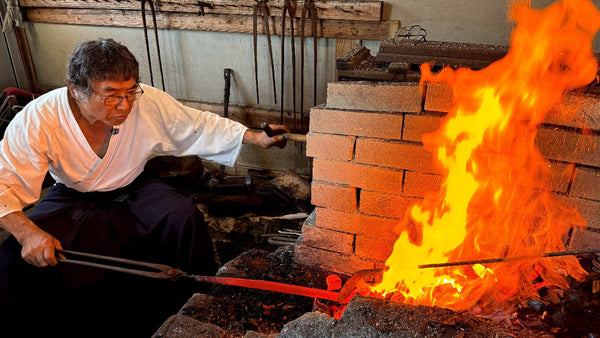
    The process begins with smelting iron sand in a traditional clay furnace called a tatara. Over several days, the smelter produces raw tamahagane steel, which is then carefully selected, folded, and hammered by the smith. This folding process — which can be repeated dozens of times — removes impurities and creates the distinctive grain patterns visible in high-quality blades.

    • Forging (Kitae): The steel is heated, folded, and hammered to refine its structure
    • Shaping (Sori): The blade’s distinctive curve is formed through differential cooling
    • Hardening (Yakiire): Clay coating and water quenching create the hard edge and softer spine
    • Polishing (Togi): Hours of hand-polishing reveal the blade’s hamon (temper line) and grain

    This meticulous process can take weeks or even months for a single blade — a testament to the dedication Japanese smiths bring to their craft.

    Shuriken, Kunai, and the Full Ninja Toolkit

    Beyond the tanto and short sword, ninja relied on a range of specialized throwing and utility blades. Understanding the differences between these tools helps separate historical fact from Hollywood myth.

    Collection of authentic Japanese ninja tools including shuriken, kunai, and kogatana blades

    Hira-Shuriken (Throwing Stars)

    The flat, star-shaped hira-shuriken is the most recognizable ninja weapon worldwide. Contrary to popular belief, shuriken were not primarily lethal weapons — they were distraction tools. A skilled shinobi would throw them to create an opening for escape or to force an enemy into an unfavorable position.

    Traditional shuriken came in many shapes: 4-pointed, 6-pointed, 8-pointed, and even asymmetrical designs unique to specific ninja clans. Each design carried slightly different aerodynamic properties, and ninja would train extensively with specific patterns they favored.

    Kunai — The Multi-Purpose Tool

    Perhaps the most versatile item in the ninja’s arsenal, the kunai was originally a simple agricultural and masonry tool — essentially a trowel with a spike. Ninja repurposed it as a climbing aid, a digging implement, a prying tool, and yes, a weapon. The distinctive ring pommel allowed the kunai to be attached to rope for grappling or retrieval after throwing.

    Modern kunai reproductions are popular among martial arts practitioners and collectors alike, valued both for their historical significance and their elegant, functional design.

    Kogatana — The Hidden Utility Blade

    The kogatana (小刀, “small blade”) is a tiny utility knife traditionally housed in a slot in a samurai’s or ninja’s sword scabbard. Despite its small size — typically just 9–10 cm — the kogatana served dozens of purposes: writing implements, eating utensils, first aid tools, and last-resort weapons. Its compact design made it easy to conceal and carry at all times.

    The Enduring Legacy of Ninja Blade Culture

    Dramatic ninja silhouette holding a katana against a full moon

    Five centuries after the golden age of the shinobi, ninja blade culture is experiencing a remarkable renaissance. From serious martial arts practitioners training with traditional weapons to passionate collectors seeking authentic, hand-forged reproductions — the demand for quality Japanese blades has never been stronger.

    What drives this enduring fascination? In part, it’s the extraordinary craftsmanship — the knowledge that every blade represents hundreds of hours of skilled labor and centuries of refined technique. But there’s also something deeper: these weapons embody a philosophy. The ninja believed that a blade was only as good as the discipline of its wielder. Mastery of the weapon required mastery of the self.

    Whether you’re a collector, a history enthusiast, a martial arts practitioner, or simply someone who appreciates extraordinary craftsmanship, the world of ninja blades offers a lifetime of exploration. Each blade has a story — of the ore from which it was born, the hands that shaped it, and the tradition it carries forward.

    Choosing Your First Ninja Blade

    If you’re considering adding a Japanese blade to your collection, here are the key factors to consider:

    • Steel type: Look for high-carbon steel (1045, 1060, 1095) or traditional tamahagane for authentic pieces
    • Full tang construction: Ensures the blade extends through the entire handle for maximum strength and balance
    • Heat treatment: Proper differential hardening creates the distinctive hamon and ensures edge retention
    • Provenance: Authentic pieces from reputable smiths or verified vendors hold their value and quality over time
    • Purpose: Display pieces, martial arts practice blades, and cutting tools have different requirements — know your intent before purchasing

    The shadow warriors of feudal Japan left behind a legacy etched in steel. In every hand-forged shuriken, every carefully balanced kunai, every precisely tempered tanto blade — the spirit of the shinobi endures. Welcome to the world of ninja blades.

  • Shadow and Steel: The Complete Guide to Traditional Ninja Blades

    Shadow and Steel: The Complete Guide to Traditional Ninja Blades

    In the shadowy world of feudal Japan, the ninja — or shinobi — were masters of stealth, strategy, and survival. But behind every legendary ninja was an equally legendary blade. From the curved edge of a tanto to the razor-sharp grip of a ninjato, the tools of the trade were as much a part of the ninja’s identity as the dark garments they wore. This guide dives deep into the traditional blades of the ninja, exploring their history, their craft, and how to care for them today.

    The Origins of Ninja Bladecraft

    The ninja tradition emerged during Japan’s turbulent Sengoku period (1467–1615), a time of relentless civil war and political intrigue. Unlike the samurai, who followed a strict code of bushido and favored the long katana, ninja prioritized function above all else. Their blades were forged for concealment, speed, and versatility — meant to dispatch targets silently in the dark, not to clash openly on the battlefield.

    The blade schools of Iga and Kōka provinces — located in modern-day Mie and Shiga Prefectures — became the legendary heartlands of ninja training. The bansenshūkai, a 17th-century ninja training manual, documented not only their techniques but the specific tools they used, many of which centered around their knives and blades.

    Traditional Japanese knife and blade collection displayed artistically

    The Essential Ninja Blades

    While popular culture often reduces the ninja’s arsenal to throwing stars and black swords, the reality was far more nuanced. Here are the core blades every ninja relied upon:

    1. Tanto (短刀) — The Short Blade

    The tanto is perhaps the most iconic of ninja knives, measuring between 15 and 30 centimeters in length. Originally developed as a companion to the katana for samurai, ninja adopted and modified the tanto for close-quarters use. Its single or double-edged blade excelled at stabbing and slashing, and its compact size allowed it to be concealed in robes, boots, or even beneath armor.

    Traditional tanto blades were forged from tamahagane steel — a high-carbon steel produced in a tatara furnace using iron sand and charcoal. This centuries-old process yielded a blade with remarkable hardness and edge retention, qualities the ninja demanded above all else.

    2. Ninjato (忍者刀) — The Ninja Sword

    Though its historical authenticity is debated, the ninjato (also called ninjaken or shinobigatana) is closely associated with the ninja tradition. Unlike the curved katana, the ninjato features a straight blade — a design that makes it faster to draw and more practical in tight indoor spaces. Accounts from Iga province describe ninja carrying straight-bladed swords that were shorter and lighter than the samurai katana, optimized for quick strikes rather than sustained combat.

    3. Kunai (苦無) — The Utility Blade

    The kunai began its life not as a weapon but as a farming and masonry tool — a kind of trowel used for digging and prying. Ninja repurposed this simple iron tool into one of their most versatile instruments. With a leaf-shaped blade and a ring-tipped handle, the kunai could be used for throwing, climbing, digging into walls, and close combat. Its humble origins and simple construction made it cheap to produce, easy to conceal, and infinitely useful.

    Ninja warrior in traditional attire in atmospheric Japanese setting

    The Art of Japanese Blade Forging

    What sets traditional Japanese blades apart from Western counterparts is the extraordinary craftsmanship baked into every millimeter of steel. A master Japanese bladesmith — a tōshō — could spend weeks or even months forging a single blade, folding the metal dozens of times to eliminate impurities and create the characteristic layered grain pattern known as hada.

    The distinctive hamon — the wavy line visible along the blade’s edge — is not merely decorative. It marks the boundary between the hard edge steel and the softer spine, created through differential heat treatment called tsuchioki. This gives the blade its legendary combination of a razor-sharp cutting edge and a spine flexible enough to absorb shock without snapping. It’s a duality that perfectly mirrors the ninja themselves: hard when needed, flexible when required.

    Modern bladesmiths who follow traditional Japanese methods still train for years under master craftsmen, and authentic hand-forged pieces command prices in the thousands of dollars — a testament to the unmatched skill and artistry involved.

    Caring for Your Traditional Japanese Blade

    Owning a traditional Japanese blade is a privilege that comes with responsibility. These are not tools to neglect — proper care is essential to preserve both their functionality and their beauty.

    Close-up of Japanese knife blade showing fine steel detail

    Cleaning and Oiling

    After every use — or even after simply handling the blade — the steel must be cleaned of fingerprints and moisture. Use a soft cotton cloth to wipe the blade from spine to edge, never edge to spine. Then apply a very thin coat of chōji oil (clove oil mixed with mineral oil), the traditional choice for Japanese blade preservation. This creates a protective barrier against humidity and oxidation.

    Sharpening with Whetstones

    Japanese blades require Japanese sharpening technique. Unlike Western blades sharpened on both sides at a symmetric angle, most Japanese knives and swords feature an asymmetric grind — sharpened primarily on one side. Use a progression of Japanese whetstones, starting with a coarse grit (around 200–400) to restore a damaged edge, then moving through medium (1000–2000) and finishing with a fine or ultra-fine stone (6000–12000) for a mirror-polished, razor edge. Maintain the blade’s original angle — typically between 10 and 15 degrees — throughout the process.

    Storage

    Store your blade in a saya (wooden scabbard) or on a dedicated blade stand. Keep it away from humidity, salt air, and temperature extremes. Never store a blade in a leather sheath long-term — leather retains moisture and accelerates corrosion. A well-cared-for Japanese blade can last centuries, as proven by museum-quality pieces from the 10th century that remain sharp and intact today.

    The Legacy Lives On

    The tradition of Japanese blade craft is not a relic of the past. Today, a new generation of collectors, martial artists, and craftspeople are keeping this ancient art alive. From dedicated knife-making schools in Tokyo to passionate collectors across the globe, the reverence for the traditional ninja blade endures.

    Whether you’re drawn to these blades for their history, their artistry, or their technical mastery, one thing is certain: a traditional Japanese knife is more than a tool. It is a philosophy expressed in steel — disciplined, precise, and enduring. In that sense, every blade tells the story of the shadow warriors who first carried them into the night.


    Explore our collection of traditional Japanese blades and ninja tools at Ninja Chronicles — where history meets craftsmanship.

  • The Tanto: A Masterpiece of Compact Precision

    The Tanto: A Masterpiece of Compact Precision

    The Tanto: A Masterpiece of Compact Precision

    The Japanese tanto stands as one of the most revered weapons in martial history—a blade that embodies both lethal efficiency and artistic mastery. Unlike its longer cousin the katana, the tanto represents concentrated power in a compact form, designed for close combat and ceremonial precision.

    Historical Origins

    The tanto emerged during Japan’s Heian period (794-1185), originally serving as a companion blade to the tachi sword. Samurai warriors carried tanto as a secondary weapon, but its role evolved far beyond mere backup status. During the Edo period, master smiths elevated tanto craftsmanship to an art form, creating blades that rivaled full-sized swords in complexity and beauty.

    Anatomy of Excellence

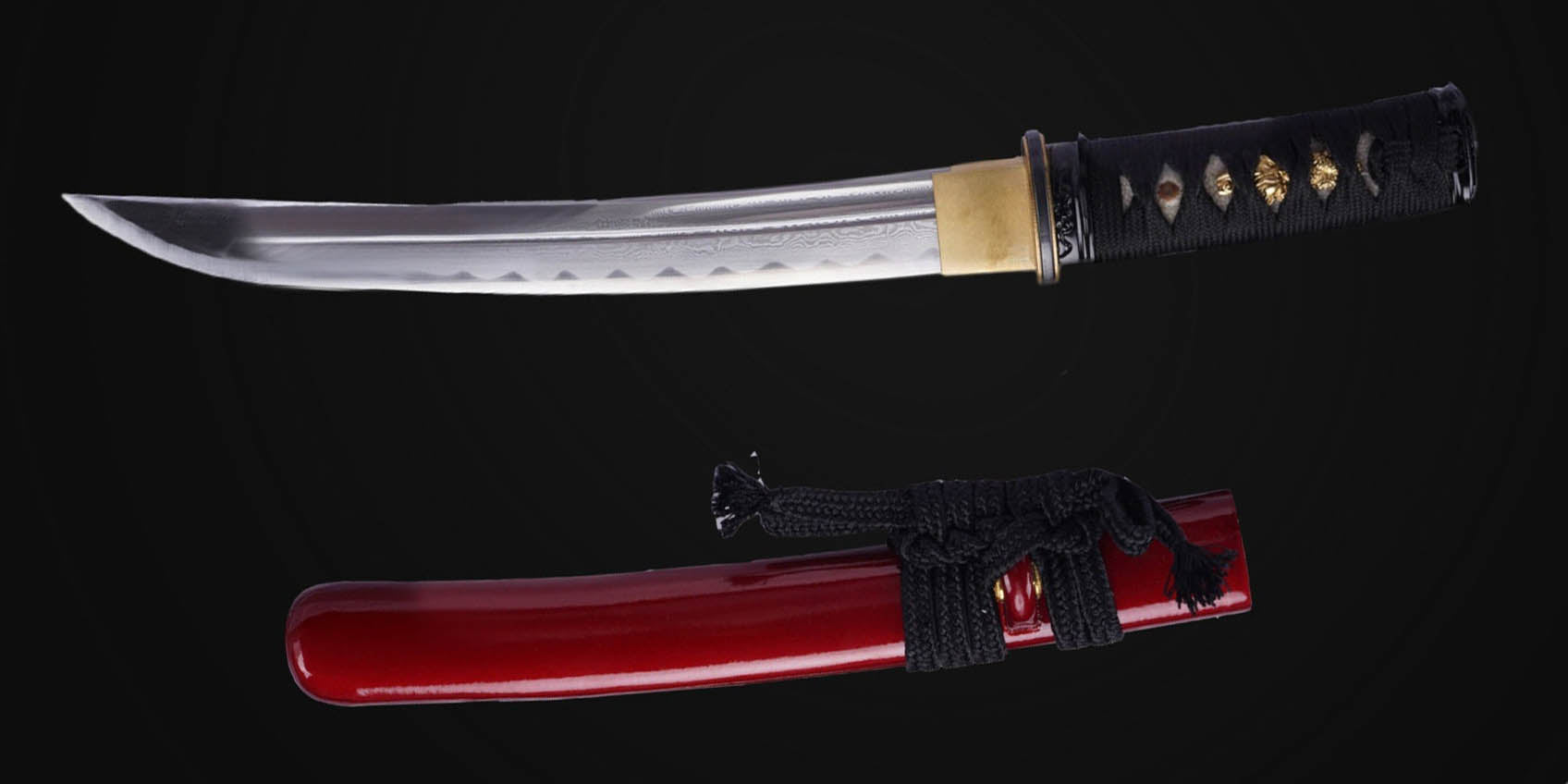
    A traditional tanto typically measures between 15 to 30 centimeters in blade length. Despite its smaller size, every element receives meticulous attention:

    • Blade Geometry: Traditional tanto feature distinct profiles—from the straight “hira-zukuri” to the curved “shobu-zukuri” and the dramatic “osoraku-zukuri” with its distinctive dropped point
    • Hamon: The temper line, visible as a wavy pattern along the edge, reveals the smith’s skill in differential hardening
    • Nakago: The tang, often hidden within the handle, bears the smith’s signature and intricate file marks
    Close-up detail of Japanese tanto blade showing hamon temper line
    Tanto blade detail showing the intricate hamon pattern

    Craftsmanship That Transcends Time

    The creation of a traditional tanto follows centuries-old methods. Master smiths fold high-carbon steel repeatedly—sometimes hundreds of times—creating thousands of layers that produce the distinctive Damascus-like patterns. Clay tempering creates the signature hamon, while stone polishing brings out the blade’s true character.

    Traditional Japanese swordsmith forge and craftsmanship
    Traditional Japanese swordsmithing process in a master forge

    Each tanto represents weeks or months of dedicated labor. The smith must understand fire, steel, and patience in equal measure. This dedication transforms raw materials into objects of both functional power and transcendent beauty.

    Modern Relevance

    Today, tanto blades serve multiple purposes beyond their martial origins:

    • Martial Arts Training: Practitioners of iaido and tantojutsu study traditional techniques
    • Collection: Serious collectors value tanto as art objects and historical artifacts
    • Utility: Modern tactical tanto designs influence military and emergency blades
    • Ceremony: Traditional tanto remain part of formal Japanese regalia

    Recognizing Quality

    Whether you’re a collector, practitioner, or enthusiast, understanding tanto quality marks requires education:

    1. Steel Quality: Traditional tamahagane steel versus modern alloys
    2. Construction Methods: Folded steel versus monosteel, differential tempering
    3. Furniture Quality: The handle wrapping (tsuka-ito), guard (tsuba), and scabbard (saya) materials
    4. Documentation: Authentic papers from recognized appraisal organizations

    Collection of Japanese tanto blades showing variety of designs
    Collection of Japanese tanto blades showing diverse craftsmanship styles

    The Living Tradition

    Japanese swordsmithing remains one of humanity’s most endangered traditional crafts. Strict regulations limit production, and the number of certified smiths dwindles each year. Yet those who continue this tradition preserve knowledge that has survived centuries of warfare, peace, and modernization.

    When you hold a genuine tanto, you connect with this unbroken chain of craftsmanship—a tangible link to the samurai who once carried these blades into battle, and the masters who forged them with fire, water, and unwavering dedication.

    The tanto is more than a weapon. It is history made tangible, art made functional, and tradition made immortal.

  • The Shadow’s Edge: Merging Ancient Craftsmanship with Modern Blades

    The Shadow’s Edge: Merging Ancient Craftsmanship with Modern Blades

    The blade of a ninja was never just a tool; it was a silent extension of the shadow itself. For centuries, the secrets of the “Shadow’s Edge” were guarded by master smiths who understood that a warrior’s life depended on the integrity of their steel. Today, we bridge the gap between that ancient mystery and modern craftsmanship.

    The Legacy of the Forge

    Ancient ninja weaponry, from the straight-bladed ninjatō to the versatile kunai, required a unique forging process. Unlike the samurai’s katana, which was a symbol of status and public honor, ninja blades were designed for utility, concealment, and survival. They were often made from high-carbon steel, quenched in secret oils to provide both flexibility and a razor-sharp edge that could bite through armor.

    Modern blacksmith forging a blade

    In modern times, the spirit of the forge lives on. Custom knife makers today utilize aerospace-grade alloys and CNC precision, yet many find their greatest inspiration in the traditional techniques of the past. Hand-forging remains the gold standard for enthusiasts who seek the “soul” of the blade—a quality that no machine can replicate.

    Training in the Shadow

    The environment in which a blade is mastered is as important as the blade itself. Traditional dojos were spaces of intense discipline where the art of the shadow was honed. Every strike, every parry, and every silent step was practiced until it became second nature.

    Ancient Japanese dojo at sunset

    Understanding the history of these spaces allows modern practitioners to connect with the mindset of the ancient warrior. It’s not just about the weapon; it’s about the focus and the calm before the storm.

    Artistry in Steel

    Beyond functionality, ninja weaponry was often a canvas for incredible artistry. Engravings served not only as decoration but as talismans—dragons for strength, waves for adaptability, or family crests for lineage. Even a simple kunai could be a masterpiece of metalwork.

    Intricate dragon engravings on a black-steel kunai

    Whether you are a collector of custom knives or a student of martial history, the “Shadow’s Edge” represents the peak of human ingenuity. By respecting the past and embracing the future, we ensure that the legends of the ninja continue to sharpen our world today.