Category: Uncategorized

  • The Architect of Middle-earth: J.R.R. Tolkien on the Secret Origins of The Hobbit and LOTR

    The Architect of Middle-earth: J.R.R. Tolkien on the Secret Origins of The Hobbit and LOTR

    The Architect of Middle-earth: A Deep Dive into the Mind of J.R.R. Tolkien

    In 1968, the BBC aired a rare and illuminating interview with Professor J.R.R. Tolkien. At the time, the world was in the throes of a cultural revolution. The post-World War II consensus was fracturing; the Cold War loomed large, and a new generation was seeking meaning outside the rigid structures of mid-century industrialism. It was in this atmosphere that The Lord of the Rings, a work decades in the making, exploded into a global phenomenon. Yet, for Tolkien, the “Oxford Don” who preferred the company of trees and ancient philology to the spotlight of fame, this success was as baffling as it was overwhelming.

    To understand Tolkien is to understand the tension between the mundane and the mythic. His work was often dismissed by contemporary critics as “escapism”—a term that carried a heavy stigma in a post-war literary world obsessed with “gritty realism” and social commentary. However, Tolkien’s rebuttal was as sharp as a forged blade: he viewed escapism not as the flight of the deserter, but as the escape of the prisoner. In a world increasingly dominated by the “Machine” and the threat of nuclear annihilation, Tolkien’s secondary world provided a necessary sanctuary where moral clarity and the beauty of the natural world still held sway.

    The “Glorious” Blank Page: The Mundane Origins of a Masterpiece

    The story of Middle-earth did not begin with a grand vision of a mountain of fire, but with the crushing boredom of academic bureaucracy. In the 1930s, Tolkien’s life was defined by the rhythms of an Oxford professor. His days were filled with the “laborious and boring” task of marking school certificate examinations. For a man whose mind was a repository of Old Norse sagas and Anglo-Saxon poetry, the repetitive nature of grading hundreds of student scripts was a form of mental drudgery.

    It was during one such session, sitting at his desk in 20 Northmoor Road, that Tolkien encountered what he called a “glorious” blank page. In the middle of a student’s exam script, a single page had been left empty. To a weary professor, this was a moment of profound relief—a space where nothing had to be corrected, nothing had to be judged. In that moment of mental stillness, he scribbled a sentence that would change the course of literary history: “In a hole in the ground there lived a hobbit.”

    At the time, Tolkien didn’t even know what a “hobbit” was. The word had simply bubbled up from his subconscious, a linguistic curiosity that demanded an explanation. This illustrates the fundamental nature of Tolkien’s creative process: he was a discoverer rather than an inventor. He didn’t set out to write a children’s book; he set out to find out why that sentence existed. The mundane reality of his life as a don—the tweed jackets, the pipe smoke, the endless committees—provided the stable soil from which the wild, untamed forests of his imagination could grow. The contrast was stark: while he spent his afternoons discussing the nuances of the Gothic language, his nights were spent chronicling the fall of Gondolin and the tragedy of the Children of Húrin.

    14 Years of Craftsmanship: Writing Through the Darkness

    While The Hobbit was published in 1937 to immediate acclaim, the sequel—what would become The Lord of the Rings—took fourteen years to complete. This was not merely a period of writing, but of meticulous craftsmanship, conducted against the backdrop of a world once again descending into total war. Tolkien was a “meticulous sort of bloke,” obsessed with internal consistency. He didn’t just write a story; he built a world with its own phases of the moon, its own complex timelines, and its own geological history.

    The writing process was deeply intertwined with his family life, particularly his relationship with his son, Christopher. During World War II, Christopher served in the Royal Air Force (RAF) and was stationed in South Africa. Tolkien, feeling the pangs of separation and the anxiety of a father whose son was in harm’s way, sent chapters of the developing Lord of the Rings to Christopher as “serial installments.” These letters served as a vital feedback loop, with Christopher offering critiques and encouragement from thousands of miles away. It is a poignant image: a young pilot reading about the journey to Mordor while preparing for combat in a world that felt increasingly like Mordor itself.

    The physical act of writing was also a struggle. During and after the war, Britain faced severe paper shortages. Tolkien often had to write on the backs of old exam papers or any scrap of parchment he could find. This scarcity perhaps contributed to the density of his prose; every word had to count when the very medium of communication was a luxury. He spent years “finding time schemes,” ensuring that the movements of the Fellowship across the vast geography of Middle-earth aligned perfectly with the lunar cycles he had established. This wasn’t just storytelling; it was a feat of sub-creation that required the precision of an architect and the soul of a poet.

    The Wine of Language: Philology as the Foundation

    Tolkien famously stated that his work was “fundamentally linguistic in inspiration.” For most authors, language is a tool used to tell a story. For Tolkien, the story was a tool used to provide a home for his languages. He began inventing languages as a teenager and never stopped. To him, a new language had a “flavor” or a “scent,” much like a fine wine or a rare flower. He found the study of philology—the history and structure of languages—to be the most exciting pursuit imaginable, often expressing frustration that others found it “dry and dusty.”

    His philosophy of language was rooted in “phonaesthetics”—the idea that certain sounds are inherently more pleasing than others. He famously cited the phrase “cellar door” as an example of a beautiful English sound, independent of its meaning. This aesthetic sensibility guided the creation of his Elvish tongues. Quenya, the “High-elven” speech, was heavily influenced by Finnish, a language Tolkien found “intoxicating.” Sindarin, the common Elvish tongue, drew its phonology from Welsh, reflecting the rugged, lyrical beauty of the British Isles.

    The names in his books were never arbitrary. Take the word “hobbit,” for instance. While it started as a nonsense word, Tolkien eventually linked it to the Old English hol-bytla, meaning “hole-builder.” This linguistic grounding gave his world a sense of “depth”—the feeling that behind every name and every song lay thousands of years of history. He didn’t just want his languages to be functional; he wanted them to be “aesthetically pleasing.” He would spend hours refining the declension of a verb or the etymology of a place-name, believing that the internal logic of a language was the key to the “secondary belief” of the reader. If the language felt real, the world would feel real.

    Allegory vs. Applicability: The Rebuttal to the Critics

    One of the most persistent misunderstandings of Tolkien’s work is the attempt to read it as a direct allegory for the events of the 20th century. Critics of his time were quick to draw parallels: Saruman was Hitler, the Shire was England under post-war rationing, and the One Ring was the Atomic Bomb. Tolkien vehemently rejected these interpretations. He had a “cordial dislike” for allegory in all its forms, preferring what he called “applicability.”

    The difference is crucial. Allegory resides in the “purposed domination of the author,” where the writer forces a single, specific meaning onto the text. Applicability, however, resides in the “freedom of the reader.” Tolkien wanted his story to be a myth that could speak to any age, not a political tract disguised as a fantasy. He pointed out that he began building the mythology of the Dark Lord and the Ring long before the H-bomb was even a theoretical possibility. In fact, much of the “Dark Lord” imagery was developed during his time as an undergraduate and during his service in the trenches of World War I.

    His rebuttal to the “Ring as the Bomb” theory was particularly nuanced. He argued that if the story were an allegory for the nuclear age, the Ring would have been used against Sauron, not destroyed. The “good guys” would have established a new dictatorship based on the power of the Ring, and the story would have ended in a different kind of darkness. By choosing the path of renunciation—the destruction of power rather than its use—Tolkien was making a moral point that transcended the specific politics of the 1940s. He was interested in the “eternal spirit” of the struggle against evil, not the headlines of the daily newspaper.

    The Root of All Stories: Death and the “Gift” of Mortality

    When asked what his “stupendously long narrative” was actually about, Tolkien’s answer was surprisingly stark: “Death. Inevitably, death.” This might seem a grim assessment for a work often associated with heroism and wonder, but for Tolkien, death was the “key-spring” of the human condition. He often quoted the French philosopher Simone de Beauvoir: “There is no such thing as a natural death… all men must die, but for every man his death is an accident and, even if he knows it and consents to it, an unjustifiable violation.”

    In Middle-earth, this tension is explored through the differing fates of Elves and Men. The Elves are immortal, bound to the circles of the world until its end. To them, death is a strange and often tragic mystery. To Men, however, death is the “Gift of Ilúvatar”—a release from the weariness of time. Tolkien suggests that the greatest tragedies occur when Men try to cling to life beyond their allotted span, as seen in the fall of Númenor and the transformation of the Nazgûl. The Ring itself is an instrument of “unnatural” life, stretching the wearer until they become a “thin and stretched” shadow.

    However, Tolkien’s obsession with death was balanced by his concept of “Eucatastrophe.” He coined this term to describe the sudden, joyous “turn” in a story—a miraculous grace that snatches victory from the jaws of certain defeat. It is the moment when the eagles arrive, or when the Ring is finally consumed by the fire. For Tolkien, Eucatastrophe was a glimpse of a higher reality, a “sudden and miraculous grace” that made the reality of death bearable. It wasn’t a denial of sorrow, but a “fleeting glimpse of Joy, Joy beyond the walls of the world, poignant as grief.”

    The Lost Landscape: Geography and the Industrial Machine

    Tolkien’s Middle-earth is a world of profound geographical beauty, but it is also a world under threat. His descriptions of the Shire were deeply rooted in his childhood memories of Sarehole Mill, a small hamlet in Warwickshire. To the young Tolkien, Sarehole was a paradise of green meadows and slow-moving water. However, as he grew, he watched as the industrial sprawl of Birmingham slowly consumed the countryside of his youth. The “Machine”—his term for the destructive power of industrialization and technology—was the enemy of the “Spirit.”

    This personal loss became the blueprint for the “Scouring of the Shire” at the end of The Return of the King. When the hobbits return home, they find their idyllic land transformed into a landscape of smoke, felled trees, and ugly, functional buildings. This was not an allegory for post-war Britain, but a reflection of a process Tolkien had witnessed his entire life: the sacrifice of beauty and tradition at the altar of “progress.”

    His love for trees was particularly profound. He viewed them as sentient beings, “full of years and wisdom,” and he often expressed a “simple-minded” longing to communicate with them. The Ents, the shepherds of the forest, were his tribute to the silent, enduring life of the woods. When Tolkien looked at a tree, he didn’t see timber; he saw a living history. His work is a lament for the lost landscapes of England, a call to remember that the earth is not a resource to be exploited, but a garden to be tended.

    Mythology and the Music of the Ainur: Why the Gods Make Mistakes

    Tolkien’s world was not a standalone story; it was the final chapter of a vast, complex mythology that began with the Ainulindalë, or the “Music of the Ainur.” In Tolkien’s creation myth, the supreme being, Eru Ilúvatar, creates a group of divine spirits (the Ainur) and asks them to sing a great theme. This music becomes the blueprint for the universe. However, the mightiest of the Ainur, Melkor, seeks to weave his own discordant thoughts into the music, creating the origin of evil.

    This mythological framework explains why the “gods” (the Valar) in Tolkien’s world are fallible. They are not omnipotent; they are sub-creators who make mistakes. Tolkien points out that the Valar made a “primary error” when they invited the Elves to live with them in the paradise of Valinor. By trying to protect the Elves from the dangers of Middle-earth, they inadvertently stifled their growth and paved the way for the rebellion of the Noldor. This theme of “divine fallibility” adds a layer of complexity to his world. Even the highest powers must learn through suffering and loss. The history of Middle-earth is a history of “long defeat,” a series of attempts to preserve beauty in a world that is inherently flawed. Yet, it is in the struggle against this inevitable decline that true heroism is found.

    Conclusion: The Reluctant Hero and the Eternal Story

    In the end, Tolkien viewed himself as a “reluctant hero,” much like the hobbits he created. He was a man who loved “basic food,” “elevated feelings,” and the quiet comfort of his study. He was suspicious of the “vast numbers” of fans who treated his work as a cult, noting that many who claimed to love the books had not “read them with any attention.” He was a man of the 19th century living in the 20th, a philologist who accidentally became a myth-maker.

    The enduring power of Tolkien’s work lies in its refusal to offer easy answers. It is a story about the burden of power, the inevitability of death, and the necessity of hope. As he walked through the gardens of Oxford, leaning on his cane and looking up at the ancient trees, Tolkien remained a man caught between two worlds. He had built a monument that would outlast the “Machine” he so feared, proving that while “our scholars come and go, our books must remain with us.” Middle-earth is not just a place in a book; it is a map of the human soul, drawn by a man who understood that the smallest person can indeed change the course of the future.

  • Five Sacred Weapons of the Shinobi: A Complete Guide to the Ninja Arsenal

    Five Sacred Weapons of the Shinobi: A Complete Guide to the Ninja Arsenal

    For centuries, the shinobi of feudal Japan operated in the shadows, relying not only on their extraordinary physical and mental discipline but also on a carefully chosen arsenal of weapons. These tools were engineered for stealth, precision, and lethality — each one a masterpiece of form meeting function. Whether striking from darkness or escaping a deadly ambush, a ninja’s weapons were the extension of their very spirit. To understand more about the philosophy behind these tools, read about the shinobi blade. In this guide, we explore five of the most iconic weapons in the shinobi’s arsenal: their history, design, and role in the hidden discipline of the ninja. For modern practitioners, understanding knife throwing is also essential.

  • The Art of the Shinobi Blade: More Than Just a Weapon

    The Art of the Shinobi Blade: More Than Just a Weapon

    In the world of the shinobi, a weapon was never just a tool for combat; it was an extension of the warrior’s soul, a piece of engineering designed for versatility, and a silent partner in the art of the shadow. While the katana of the samurai is celebrated for its elegance and status, the tools of the ninja—the ninjato, the shuriken, and the kunai—tell a story of survival, practicality, and absolute precision. The Ninjato: Built for the Mission Unlike the curved katana, the traditional ninja blade was often shorter and straighter. This wasn’t merely a stylistic choice; a shorter blade allowed for better movement in tight spaces, a key part of stealth techniques.

  • The Hidden Discipline Behind Every Effective Ninja

    The Hidden Discipline Behind Every Effective Ninja

    The Hidden Discipline Behind Every Effective Ninja

    Ninja stories usually focus on dramatic weapons, shadows, and impossible escapes. But the deeper lesson behind the shinobi tradition is not spectacle — it is discipline. A ninja succeeds by preparing carefully, moving intelligently, and adapting to conditions faster than an opponent can react.

    That idea still resonates today. Whether someone is building a business, managing a team, or learning a skill, the same principles apply: observe first, commit second, and waste as little motion as possible. In that sense, the ninja is less a mythic assassin and more a symbol of efficient thinking under pressure.

    One of the most overlooked parts of ninja practice is training posture and awareness. Strength matters, but so does balance. A shinobi who can stay calm in motion has an advantage long before any conflict begins. The first lesson is simple: control your breathing, control your pace, and control the environment you can influence.

    Ninja training in a bamboo grove

    Stealth Is More Than Hiding

    Stealth is often misunderstood as the art of being invisible. In reality, it is the art of becoming unremarkable at the right moment. A practiced ninja knows how to blend into noise, timing, and expectation. That means understanding routes, shadows, elevation, and the habits of observers.

    Modern readers can borrow that mindset without turning it into fantasy. In digital work, stealth becomes focus. In design, it becomes restraint. In leadership, it becomes the ability to act only when the action matters. The shinobi lesson is not to disappear — it is to reduce friction.

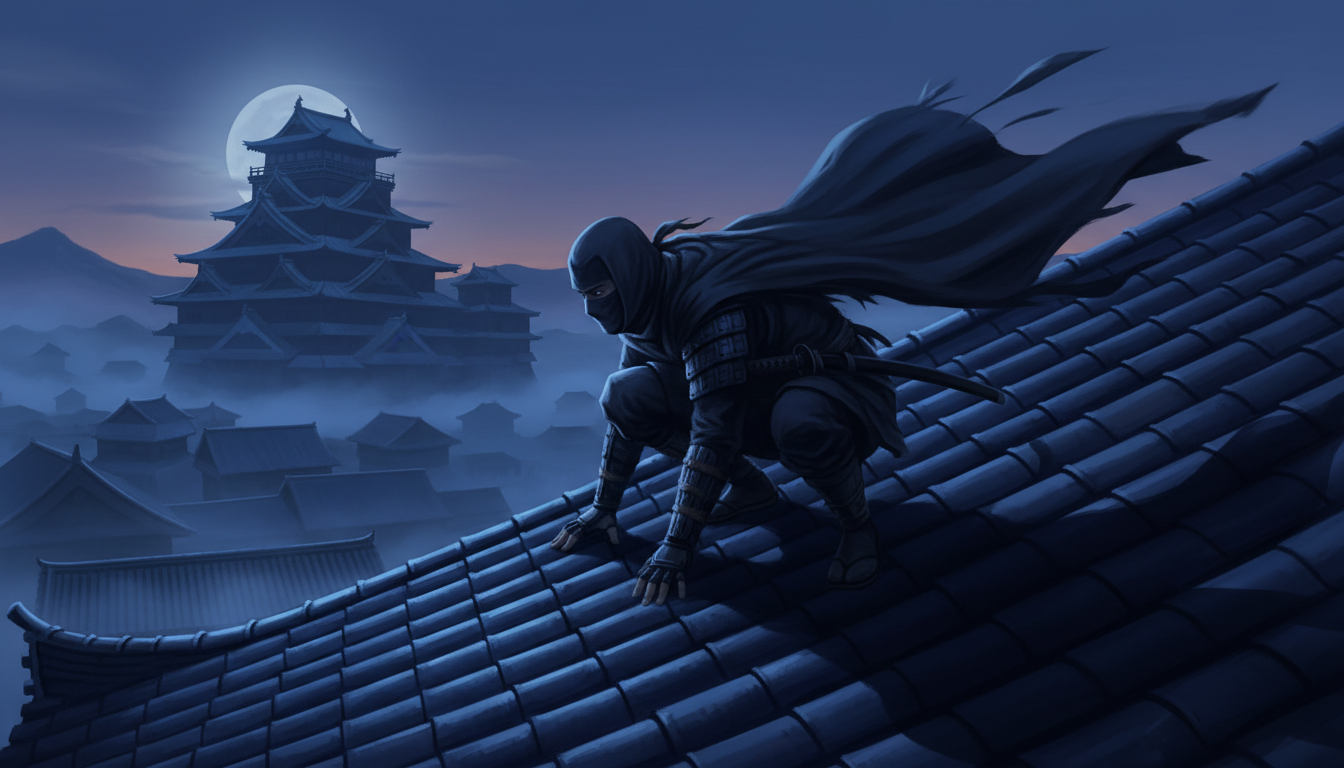
    Ninja moving across rooftops at night

    The Tools Tell the Story

    Ninja equipment is usually described as exotic, but the real value of the tools was versatility. A good tool served multiple purposes, and a good practitioner understood when not to use it. This is where discipline and creativity meet: preparation expands options, but judgment decides which option is worth taking.

    Ninja tools arranged on a wooden table

    That principle matters far beyond martial arts. The most effective people rarely rely on complexity for its own sake. They keep their systems light, their thinking clear, and their habits repeatable. The shinobi tradition reminds us that elegance is often the result of subtraction, not addition.

    What the Ninja Still Teaches Us Today

    We don’t need secret scrolls to learn from the ninja tradition. We need a commitment to awareness, patience, and precision. That combination works in writing, design, business, coding, and everyday decision-making. The lesson is timeless: move with intention, keep your options open, and let your preparation do most of the work.

    If the ninja still fascinates us, it is because the archetype captures something universal. In a noisy world, clarity is power. In a crowded field, restraint can be a superpower. And in any challenge, the quietest plan is often the one most likely to succeed.

  • Night Movement for Modern Shinobi: Lessons from Classical Ninja Fieldcraft

    Night Movement for Modern Shinobi: Lessons from Classical Ninja Fieldcraft

    In popular culture, the ninja often appears as a blur in black cloth—silent, invisible, and almost supernatural. The historical reality is more disciplined and, in many ways, more interesting. Shinobi fieldcraft relied on preparation, observation, controlled movement, and a deep understanding of terrain. Those ideas still resonate today, whether you are fascinated by martial history, stealth techniques, or the timeless appeal of operating with precision instead of force.

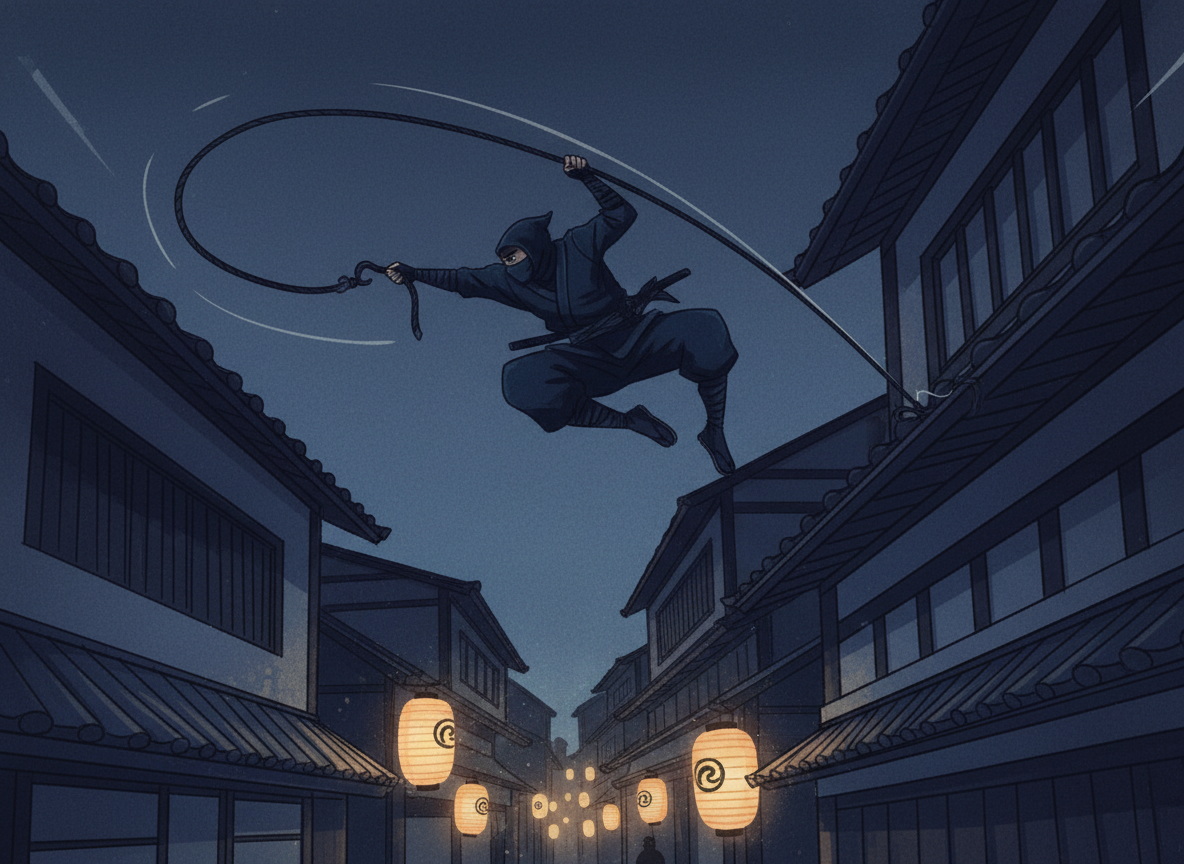
    Shinobi using a grappling hook to move between rooftops at night

    1. Movement Was a Skill, Not a Costume

    One of the most persistent myths about ninja is that stealth came from clothing alone. In practice, invisibility was created through behavior. A trained shinobi would choose routes that reduced silhouette, avoid noisy surfaces, move with patience, and use weather, darkness, and distraction as allies. Rooflines, tree cover, streams, and narrow service paths all offered opportunities for concealment when used intelligently.

    This is one reason ninja lore remains so compelling: it emphasizes awareness over brute strength. The most effective operator was not necessarily the strongest fighter, but the one who understood timing, routes, and risk. Modern readers can see the same principle in everything from tactical training to stealth game design—success often depends on knowing when not to be seen.

    Traditional ninja tools arranged on dark cloth

    2. Tools Mattered, But Discipline Mattered More

    Ninja equipment has become legendary: shuriken, kunai, grappling hooks, powders, cords, and compact kits designed for mobility. Yet tools were only useful when paired with restraint and planning. Carry too much and you lose speed. Use the wrong item at the wrong time and you create noise, attention, or delay. The true art of fieldcraft was selecting only what the mission required and knowing how to improvise when conditions changed.

    This practical mindset gives ninja history its enduring realism. Behind every romantic image of secret weapons lies a more grounded truth: stealth is logistics. It is about preparation, efficiency, and the quiet confidence that comes from rehearsing simple actions until they become second nature.

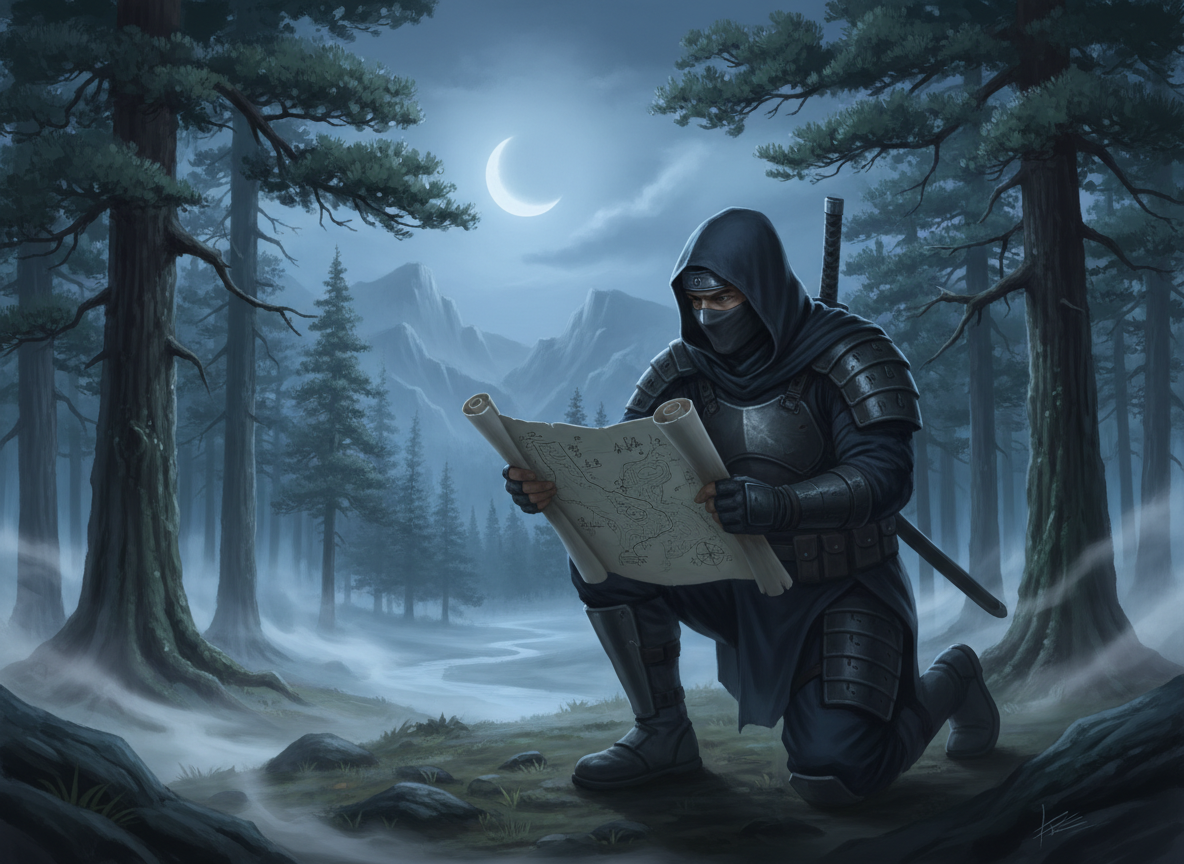
    Ninja studying a map in a moonlit forest

    3. Terrain Reading Was the Real Advantage

    A shinobi who could read the land had a decisive edge. Elevation, moonlight, tree density, water sound, and human traffic patterns all shaped the safest route. Forest paths could hide movement but slow progress; rooftops offered speed but increased exposure; open fields were dangerous unless weather or darkness provided cover. In that sense, ninja strategy was as much about environmental intelligence as martial skill.

    That attention to terrain still feels surprisingly modern. Today we talk about situational awareness, route planning, and information advantage. Classical shinobi lived those principles. They observed first, acted second, and understood that the environment is never just background—it is part of the mission.

    Why Ninja Fieldcraft Still Fascinates Us

    The appeal of ninja history goes far beyond weapons or mystery. It is the philosophy of subtle effectiveness that keeps people interested: move carefully, prepare thoroughly, adapt quickly, and let knowledge do the heavy lifting. Whether encountered through historical study, martial arts, games, or modern storytelling, the shinobi remains a symbol of intelligent action under pressure.

    In an age of noise and constant visibility, that lesson feels especially relevant. Sometimes the most powerful move is the one made with patience, precision, and almost no trace at all.

  • Night Movement for Modern Shinobi: Lessons from Classical Ninja Fieldcraft

    Night Movement for Modern Shinobi: Lessons from Classical Ninja Fieldcraft

    In popular culture, the ninja often appears as a blur in black cloth—silent, invisible, and almost supernatural. The historical reality is more disciplined and, in many ways, more interesting. Shinobi fieldcraft relied on preparation, observation, controlled movement, and a deep understanding of terrain. Those ideas still resonate today, whether you are fascinated by martial history, stealth strategy, or the timeless appeal of operating with precision instead of force.

    Shinobi using a grappling hook to move between rooftops at night

    1. Movement Was a Skill, Not a Costume

    One of the most persistent myths about ninja is that stealth came from clothing alone. In practice, invisibility was created through behavior. A trained shinobi would choose routes that reduced silhouette, avoid noisy surfaces, move with patience, and use weather, darkness, and distraction as allies. Rooflines, tree cover, streams, and narrow service paths all offered opportunities for concealment when used intelligently.

    This is one reason ninja lore remains so compelling: it emphasizes awareness over brute strength. The most effective operator was not necessarily the strongest fighter, but the one who understood timing, routes, and risk. Modern readers can see the same principle in everything from tactical training to stealth game design—success often depends on knowing when not to be seen.

    Traditional ninja tools arranged on dark cloth

    2. Tools Mattered, But Discipline Mattered More

    Ninja equipment has become legendary: shuriken, kunai, grappling hooks, powders, cords, and compact kits designed for mobility. Yet tools were only useful when paired with restraint and planning. Carry too much and you lose speed. Use the wrong item at the wrong time and you create noise, attention, or delay. The true art of fieldcraft was selecting only what the mission required and knowing how to improvise when conditions changed.

    This practical mindset gives ninja history its enduring realism. Behind every romantic image of secret weapons lies a more grounded truth: stealth is logistics. It is about preparation, efficiency, and the quiet confidence that comes from rehearsing simple actions until they become second nature.

    Ninja studying a map in a moonlit forest

    3. Terrain Reading Was the Real Advantage

    A shinobi who could read the land had a decisive edge. Elevation, moonlight, tree density, water sound, and human traffic patterns all shaped the safest route. Forest paths could hide movement but slow progress; rooftops offered speed but increased exposure; open fields were dangerous unless weather or darkness provided cover. In that sense, ninja strategy was as much about environmental intelligence as martial skill.

    That attention to terrain still feels surprisingly modern. Today we talk about situational awareness, route planning, and information advantage. Classical shinobi lived those principles. They observed first, acted second, and understood that the environment is never just background—it is part of the mission.

    Why Ninja Fieldcraft Still Fascinates Us

    The appeal of ninja history goes far beyond weapons or mystery. It is the philosophy of subtle effectiveness that keeps people interested: move carefully, prepare thoroughly, adapt quickly, and let knowledge do the heavy lifting. Whether encountered through historical study, martial arts, games, or modern storytelling, the shinobi remains a symbol of intelligent action under pressure.

    In an age of noise and constant visibility, that lesson feels especially relevant. Sometimes the most powerful move is the one made with patience, precision, and almost no trace at all.

  • The Shadow’s Breath: Master Techniques of Shinobi Stealth

    The Shadow’s Breath: Master Techniques of Shinobi Stealth

    In the annals of history, few figures are as shrouded in mystery and whispered about in reverence as the Shinobi. These masters of the shadow were not just warriors; they were survivalists, spies, and ultimate practitioners of the art of invisibility. Today, we delve into the core techniques that allowed the ninja to vanish before the very eyes of their enemies.

    1. The Art of Focused Observation (Kanchu014d)

    Before a ninja even stepped into the shadows, they mastered their senses. A Shinobiu2019s eyes were trained to detect the slightest movement in the dark, and their ears to distinguish the rustle of leaves from the soft footfall of a guard. This intense focus was the foundation of all stealth operations.

    Close-up of ninja eyes focus
    The intense focus of a Shinobi master.

    2. Tools of the Shadow: Beyond the Katana

    While the sword is often romanticized, the true utility of a ninja lay in their specialized equipment. From the Kaginawa (grappling hook) used for scaling fortress walls to Makibishi (caltrops) deployed during a hasty retreat, every tool served a singular purpose: maintaining the advantage of silence and surprise.

    Shinobi stealth tools layout
    Essential tools for the art of infiltration.

    3. Moving Like the Wind: The Bamboo Forest Path

    True stealth is not just about staying still; it is about moving without being perceived. The technique of Shinobi-aruki (silent walking) involves shifting weight precisely to avoid creaking floorboards or snapping twigs. In the dense bamboo forests of Iga and Koga, ninjas used the natural environment to mask their presence, appearing more like a passing breeze than a human intruder.

    Ninja shadow in bamboo forest
    A shadow moving through the silent bamboo.

    To master the art of the shadow is to understand that power lies not in being seen, but in the potential of what remains hidden. The legacy of the Shinobi continues to inspire us to look deeper into the silence and find our own inner strength.

  • Философия Кэккай: Сакральные границы и искусство защиты ниндзя

    n

    В мире древней Японии, где границы между физическим и духовным мирами часто размывались, концепция Кэккай (結界) занимала центральное место в жизни не только жрецов и мистиков, но и легендарных воинов тени — синоби. Слово «Кэккай» буквально переводится как «связанная граница» или «барьер». Для ниндзя это понятие выходило далеко за рамки простого строительства заборов или стен; это было искусство создания защищенного пространства, как на физическом, так и на ментальном уровнях.

    nnnn

    Физический Кэккай: Архитектура выживания

    nnnn

    В контексте защиты своих убежищ и замков, ниндзя использовали физические барьеры с изощренной хитростью. Это были не просто укрепления, а психологические ловушки. «Соловьиные полы» (угуисубари), которые пели при каждом шаге врага, или скрытые коридоры были частью физического Кэккай. Граница создавалась таким образом, чтобы противник чувствовал себя уязвимым еще до начала боя. Пространство внутри Кэккай контролировалось мастером, превращая знакомую обстановку в смертельную ловушку для чужака.

    nnnn

    Духовный и мистический барьер

    nnnn

    Для синоби, практиковавших эзотерическое учение Сюгэндо и мистические практики Кудзи-ин, Кэккай имел глубокое сакральное значение. Считалось, что с помощью определенных ритуалов, жестов и мантр можно создать невидимый щит, защищающий от злых духов, враждебной магии или просто обнаружения. Использование символических знаков, начертанных на порогах или скрытых в одежде, должно было сделать воина «невидимым» для разума врага. Это был своего рода психологический барьер, позволяющий ниндзя сохранять спокойствие и концентрацию в самых экстремальных ситуациях.

    nnnn

    Кэккай в современном мире: Границы личности

    nnnn

    Хотя эпоха феодальных войн прошла, философия Кэккай остается актуальной. В современной жизни мы постоянно создаем свои «границы». Умение вовремя сказать «нет», защитить свое личное пространство от токсичных влияний и сохранить внутреннюю тишину в шуме мегаполиса — это современное прочтение древнего искусства барьеров. Ниндзя учили, что настоящий Кэккай начинается внутри: если твой разум спокоен и границы ясны, ни один враг не сможет застать тебя врасплох.

    nnnn

    Заключение

    nnnn

    Искусство Кэккай — это напоминание о том, что защита — это не только нападение или толстые стены. Это осознанность и контроль над пространством вокруг себя. Понимая свои границы и уважая чужие, мы обретаем силу синоби: способность быть защищенным, оставаясь при этом открытым миру. Древние хроники ниндзя учат нас, что самый надежный барьер — это тот, который построен на знании, дисциплине и непоколебимом духе.

    n
  • Кусаригама: Искусство смертоносной цепи и серпа

    Кусаригама: Искусство смертоносной цепи и серпа

    Кусаригама: Искусство смертоносной цепи и серпа

    В тени японской истории, где грань между легендой и реальностью стирается, особое место занимает кусаригама — одно из самых экзотических и эффективных орудий в арсенале синоби. Если катана была душой самурая, то кусаригама стала воплощением непредсказуемости и коварства ниндзя. Это оружие не просто инструмент для убийства; это сложный механизм, требующий от владельца безупречного баланса, математической точности и хладнокровия.

    Почему именно кусаригама стала символом ниндзя? В эпоху Сэнгоку скрытность и универсальность ценились выше открытого противостояния. Кусаригама позволяла бойцу сражаться как на дальней дистанции, так и вплотную, эффективно противодействуя даже самому опытному мечнику. Для обывателя она могла выглядеть как обычный сельскохозяйственный инвентарь, что позволяло лазутчикам переносить её, не привлекая лишнего внимания властей.

    Конструкция: Три элемента смерти

    Кусаригама — это гибридное оружие, состоящее из трёх ключевых компонентов, каждый из которых выполняет свою уникальную роль в бою:

    • Кама (Серп): Основа оружия. Это короткая деревянная рукоять с изогнутым стальным лезвием. В отличие от обычного крестьянского серпа, боевая кама изготавливалась из высококачественной стали и имела усиленное крепление. Лезвие предназначалось для рубящих, режущих и колющих ударов на ближней дистанции.
    • Кусари (Цепь): Длинная кованая цепь, длина которой обычно варьировалась от 2,5 до 4 метров. Она крепилась либо к тыльной стороне рукояти серпа, либо к месту соединения лезвия и древка. Цепь обеспечивала дистанцию и позволяла контролировать пространство вокруг бойца.
    • Фундо (Грузик): Стальной или железный утяжелитель на свободном конце цепи. Он мог иметь различную форму — от простого шара до многогранника с шипами. Фундо превращал цепь в сокрушительный снаряд, способный дробить кости или пробивать шлемы.

    Техники боя: Танец со сталью

    Искусство владения этим оружием называется кусаригамадзюцу. Бой с кусаригамой — это динамичный процесс, напоминающий смертоносный танец. Основная стратегия заключалась в использовании дистанционного преимущества.

    Мастер начинал бой, раскручивая цепь с грузиком над головой или сбоку от себя. Это создавало «зону отчуждения», к которой противник не мог приблизиться. Основной целью фундо были кисти рук врага, его колени или голова. Одним точным броском ниндзя мог выбить меч из рук самурая или ошеломить его мощным ударом металла по черепу.

    Однако истинное коварство заключалось в захвате. Цепь использовалась для того, чтобы опутать клинок противника или его конечности. Как только враг оказывался скован, ниндзя резко сокращал дистанцию и наносил решающий удар серпом. Существовали также техники «скрытого лезвия», когда серп использовался для парирования, пока цепь готовилась к решающему броску.

    История и легендарные мастера

    Происхождение кусаригамы окутано спорами. По одной версии, она развилась из обычного серпа, который крестьяне использовали для защиты от грабителей. По другой — это была осознанная разработка школ боевых искусств, искавших способ победить длинный меч (катану) и копье (яри).

    Самым известным мастером кусаригамы в истории считается Сисидо Байкэн (или Сисидо Нанри). Легенда гласит, что он был настолько искусен, что никто не мог подойти к нему на расстояние удара. Его имя навсегда запечатлено в истории благодаря дуэли с величайшим фехтовальщиком Японии — Миямото Мусаси. Согласно «Нихон Кори Дзэнсё», Мусаси смог победить Байкэна, лишь использовав короткий меч вакидзаси, чтобы заблокировать цепь, и нанеся быстрый удар, прежде чем мастер успел вернуть грузик.

    Также значительный вклад в развитие техник внесла школа Иссин-рю, основанная в XVII веке. Её последователи довели использование цепи до совершенства, сделав кусаригаму официальным учебным оружием во многих кланах.

    Преимущества и недостатки: Кусаригама против Меча

    Сравнение кусаригамы с классическим японским мечом выявляет как её сильные, так и слабые стороны:

    Преимущества:

    • Дистанция: Возможность атаковать с 3-5 метров, оставаясь вне досягаемости меча.
    • Многофункциональность: Оружие сочетает в себе дробящий, режущий и захватывающий типы атаки.
    • Психологический фактор: Непредсказуемая траектория полета грузика дезориентирует противника.
    • Защита: Цепь можно использовать для блокирования ударов меча, наматывая её на клинок.

    Недостатки:

    • Сложность освоения: Требуются годы тренировок, чтобы не травмировать самого себя при раскручивании цепи.
    • Требование к пространству: В узких коридорах или густом лесу цепь становится бесполезной, так как она цепляется за препятствия.
    • Уязвимость при промахе: Если бросок фундо не достиг цели, бойцу требуется время, чтобы вернуть цепь, что делает его беззащитным на мгновение.

    Заключение

    Кусаригама остается одним из самых интригующих видов оружия древней Японии. Она воплощает в себе философию синоби: использование слабостей противника, адаптация подручных средств и достижение цели любой ценой. Сегодня кусаригамадзюцу продолжает жить в рамках традиционных школ корю, напоминая нам о временах, когда жизнь воина зависела от его умения превратить обычный крестьянский серп в совершенный инструмент победы. Это оружие — символ того, что в руках мастера даже простая цепь может стать грознее самого острого клинка.

  • Искусство скрытности: Секреты применения Мэцубуси

    В арсенале легендарных синоби было немало средств, призванных не убить врага, а дезориентировать его, даря воину драгоценные секунды для маневра или исчезновения. Одним из самых эффективных и загадочных инструментов было Мэцубуси (目つぶし) — «ослепляющее средство».

    Что такое Мэцубуси?

    Мэцубуси — это общее название для целого класса инструментов и смесей, предназначенных для временного ослепления противника. Это не было оружием в привычном смысле слова; это был инструмент стратегии выживания. Состав смесей варьировался в зависимости от клана и конкретной задачи, но цель всегда была одна: лишить врага зрения, вызвав замешательство и панику.

    Секретные ингредиенты теней

    Ниндзя были мастерами химии и ботаники. В состав порошков Мэцубуси часто входили:

    • Молотый перец и специи: вызывали мгновенное жжение и слезотечение.
    • Мелкая металлическая стружка или песок: физически мешали зрению и вызывали боль.
    • Измельченное стекло: крайне опасный компонент, использовавшийся в исключительных случаях.
    • Пепел и известковая пыль: создавали плотное облако, затрудняющее обзор.

    Методы доставки: От яичной скорлупы до бамбуковых трубок

    Просто бросить горсть пыли в глаза — метод ненадежный. Синоби изобрели остроумные способы доставки Мэцубуси:

    1. Хаппо: Использовалась пустая скорлупа от птичьего яйца. Ее аккуратно просверливали, наполняли смесью и заклеивали тонкой бумагой. При ударе о лицо противника или твердую поверхность скорлупа мгновенно разбивалась, высвобождая облако порошка.

    2. Бамбуковые трубки (Фукибари): Короткие трубки, из которых порошок выдувался прямо в лицо врагу. Это позволяло использовать Мэцубуси с небольшого расстояния, оставаясь вне досягаемости меча.

    3. Скрытые контейнеры в оружии: Некоторые мастера модифицировали ножны меча или рукояти так, чтобы при резком обнажении клинка в сторону противника вылетало облако пыли.

    Философия момента

    Применение Мэцубуси требовало безупречного тайминга. Ниндзя не использовали его просто так. Это был кульминационный момент психологической атаки. Внезапность в сочетании с физической беспомощностью врага позволяла синоби либо нанести решающий удар, либо, что случалось чаще, бесследно раствориться в ночи.

    Искусство Мэцубуси напоминает нам, что в настоящем бою побеждает не тот, у кого длиннее меч, а тот, кто лучше владеет ситуацией и умеет использовать слабости человеческого восприятия.