
In popular culture, the ninja often appears as a blur in black cloth—silent, invisible, and almost supernatural. The historical reality is more disciplined and, in many ways, more interesting. Shinobi fieldcraft relied on preparation, observation, controlled movement, and a deep understanding of terrain. Those ideas still resonate today, whether you are fascinated by martial history, stealth techniques, or the timeless appeal of operating with precision instead of force.
1. Movement Was a Skill, Not a Costume
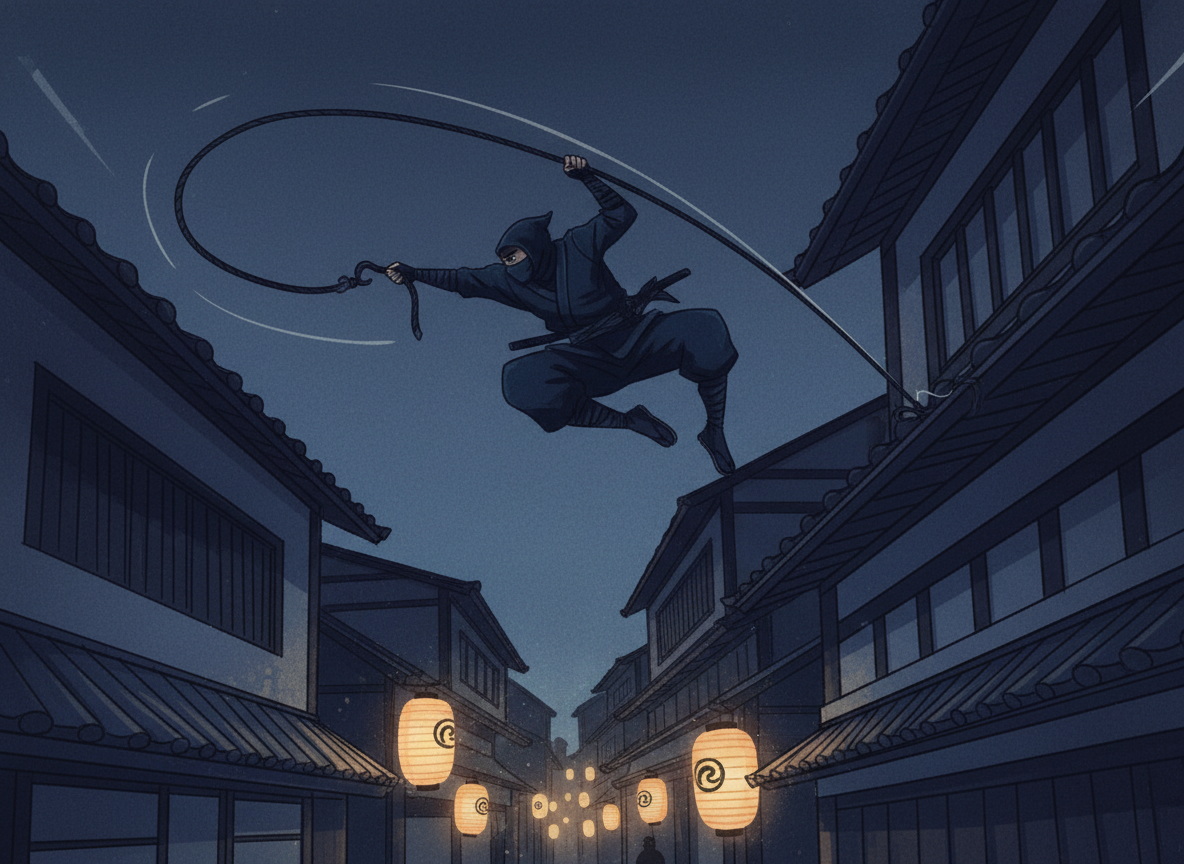
One of the most persistent myths about ninja is that stealth came from clothing alone. In practice, invisibility was created through behavior. A trained shinobi would choose routes that reduced silhouette, avoid noisy surfaces, move with patience, and use weather, darkness, and distraction as allies. Rooflines, tree cover, streams, and narrow service paths all offered opportunities for concealment when used intelligently.
This is one reason ninja lore remains so compelling: it emphasizes awareness over brute strength. The most effective operator was not necessarily the strongest fighter, but the one who understood timing, routes, and risk. Modern readers can see the same principle in everything from tactical training to stealth game design—success often depends on knowing when not to be seen.

2. Tools Mattered, But Discipline Mattered More
Ninja equipment has become legendary: shuriken, kunai, grappling hooks, powders, cords, and compact kits designed for mobility. Yet tools were only useful when paired with restraint and planning. Carry too much and you lose speed. Use the wrong item at the wrong time and you create noise, attention, or delay. The true art of fieldcraft was selecting only what the mission required and knowing how to improvise when conditions changed.
This practical mindset gives ninja history its enduring realism. Behind every romantic image of secret weapons lies a more grounded truth: stealth is logistics. It is about preparation, efficiency, and the quiet confidence that comes from rehearsing simple actions until they become second nature.

3. Terrain Reading Was the Real Advantage
A shinobi who could read the land had a decisive edge. Elevation, moonlight, tree density, water sound, and human traffic patterns all shaped the safest route. Forest paths could hide movement but slow progress; rooftops offered speed but increased exposure; open fields were dangerous unless weather or darkness provided cover. In that sense, ninja strategy was as much about environmental intelligence as martial skill.
That attention to terrain still feels surprisingly modern. Today we talk about situational awareness, route planning, and information advantage. Classical shinobi lived those principles. They observed first, acted second, and understood that the environment is never just background—it is part of the mission.
Why Ninja Fieldcraft Still Fascinates Us
The appeal of ninja history goes far beyond weapons or mystery. It is the philosophy of subtle effectiveness that keeps people interested: move carefully, prepare thoroughly, adapt quickly, and let knowledge do the heavy lifting. Whether encountered through historical study, martial arts, games, or modern storytelling, the shinobi remains a symbol of intelligent action under pressure.
In an age of noise and constant visibility, that lesson feels especially relevant. Sometimes the most powerful move is the one made with patience, precision, and almost no trace at all.
Leave a Reply